
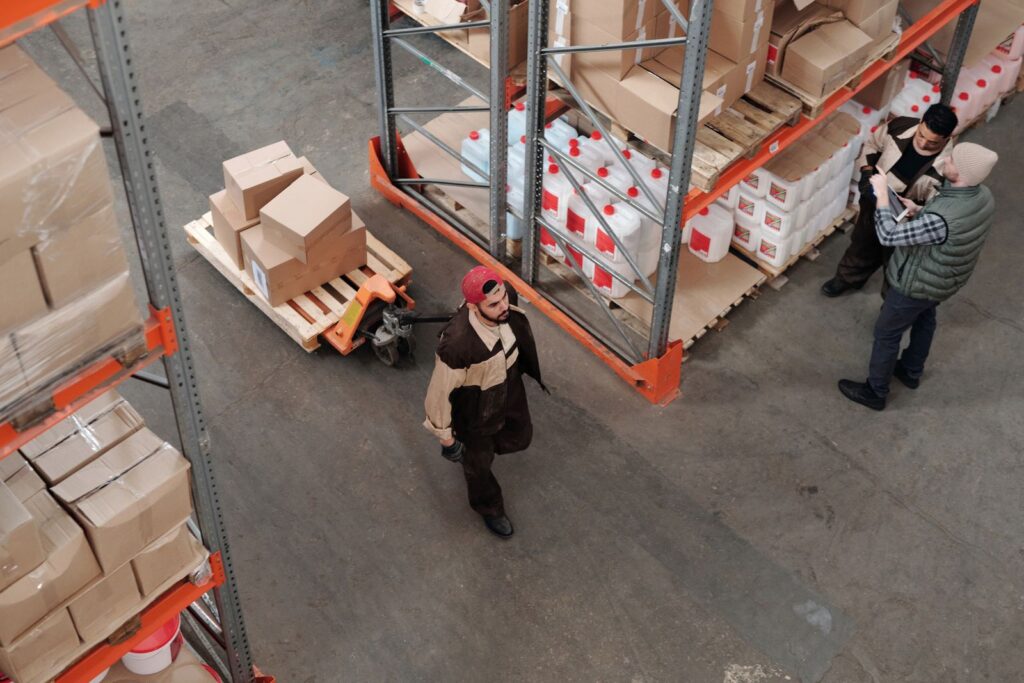
China’s factory labour shortage is structural, not cyclical. A shrinking working-age population, an ageing migrant workforce and a generational shift away from assembly-line work mean labour-intensive Chinese factories now compete for workers with wages rising faster than productivity. For importers, this shows up as higher unit prices, higher minimum order quantities, longer lead times after Chinese New Year and more variable quality on hand-assembled goods.
This guide explains what is actually happening, which product categories are most exposed, how factories are responding, and the eight practical moves buyers should make in 2026.
Table of Contents
- What Is Driving the Shortage
- Wage Levels and Trends by Region
- How It Shows Up in Your Quotes
- Which Categories Are Most Exposed
- How Factories Are Responding
- 8 Actions Buyers Should Take
- Practical Examples
- Common Mistakes
- Expert Recommendations
- FAQ
- Conclusion
- Need Help Sourcing from China?
What Is Driving the Shortage
Four forces are compounding, and none of them reverse quickly.
- Demographics. China’s working-age population peaked over a decade ago and continues to decline. Each cohort entering the labour force is smaller than the one retiring.
- An ageing migrant workforce. The rural migrant workers who built China’s export factories are now, on average, in their forties. Their children largely do not want the same jobs.
- Competing employment. Delivery, ride-hailing, livestream commerce and warehouse work offer comparable or better pay with far more autonomy than a twelve-hour assembly shift.
- Inland development. Provinces that once exported labour to Guangdong and Zhejiang now have their own factories, so fewer workers travel to the coast.
The result is a persistent recruitment gap concentrated in exactly the work export factories rely on: repetitive manual assembly, sewing, hand-finishing and packing. Broader labour-market context is tracked by the World Bank.
Wage Levels and Trends by Region
Indicative 2026 fully-loaded monthly labour costs for a general assembly operator, including social insurance, housing and overtime.
| Region | Monthly cost (USD) | 5-year direction | Recruitment difficulty | Typical industries |
|---|---|---|---|---|
| Shenzhen / Dongguan | 950-1,300 | Rising steadily | High | Electronics, precision assembly |
| Suzhou / Ningbo | 880-1,200 | Rising steadily | High | Appliances, auto parts, machinery |
| Yiwu / Jinhua | 780-1,050 | Rising | Medium-high | Small commodities, packing |
| Foshan / Zhongshan | 820-1,100 | Rising | High | Furniture, lighting, hardware |
| Inland (Jiangxi, Hunan, Anhui) | 560-820 | Rising fastest | Medium | Textiles, footwear, relocated assembly |
| Vietnam (reference) | 320-520 | Rising | Medium | Apparel, footwear, simple assembly |
Two points buyers routinely miss. First, the coastal-inland gap is narrowing, which is why relocating production inland buys less relief each year. Second, headline wage comparisons overstate the case for leaving China, because direct labour is typically only 8-25% of ex-works cost for most manufactured goods.
How It Shows Up in Your Quotes
| Symptom | What is really happening | Buyer response |
|---|---|---|
| Annual price increase of 4-9% | Wage inflation passed through on labour-heavy SKUs | Ask for a labour-content breakdown; renegotiate on material, not the whole price |
| MOQ raised without explanation | Line changeovers now cost more than they used to | Consolidate SKUs per production run; commit annual volume |
| Lead time stretched by 1-3 weeks | Line running below full headcount | Book capacity earlier; move to rolling forecasts |
| Post-Chinese New Year chaos | Worker return rates of 70-85%; new hires need training | Avoid critical launches in weeks 1-6 after CNY |
| Rising defect rates on hand work | Higher share of inexperienced operators | Increase inspection frequency on manual-assembly SKUs |
| Refusal to quote small orders | Factory prioritising high-margin, low-labour work | Bundle orders or move to a right-sized factory |

Which Categories Are Most Exposed
| Category | Labour share of ex-works cost | Exposure | Outlook |
|---|---|---|---|
| Apparel, footwear, soft goods | 25-40% | Very high | Continued migration to Southeast Asia and inland China |
| Handbags, leather goods | 25-35% | Very high | Skilled hand work keeps mid-to-high end in China |
| Cable and harness assembly | 20-30% | High | Partial automation, some relocation |
| Furniture and wood | 15-25% | High | CNC adoption offsetting part of the pressure |
| Consumer electronics | 8-15% | Medium | Automation absorbing most wage growth |
| Injection-moulded plastics | 5-12% | Low | Largely machine-paced; material dominates cost |
| Metal stamping and machining | 6-14% | Low | Stable; capital-intensive already |
Direct answer: if your product is machine-paced, the labour shortage is largely someone else’s problem. If it is assembled, sewn or hand-finished, it is your problem and it will keep getting slightly worse each year.
How Factories Are Responding
- Automation. Collaborative robots, automated optical inspection and machine tending are being deployed on high-volume lines. This is the main reason electronics pricing has stayed comparatively stable — a shift covered in our analysis of automation in Chinese factories.
- Inland relocation. Coastal firms open satellite plants in Jiangxi, Anhui or Hunan while keeping engineering and sales on the coast.
- Overseas plants. Chinese manufacturers themselves are opening factories in Vietnam, Indonesia and Mexico, often supplying the same buyers from a Chinese-managed line abroad.
- Product simplification. Engineers redesign assemblies to reduce part count and manual operations.
- Customer selectivity. Factories quietly drop low-volume, high-touch accounts. Small buyers feel the shortage as unanswered emails long before they see it as a price increase.
8 Actions Buyers Should Take
- Ask for a cost breakdown that separates labour. You cannot negotiate a wage-driven increase the same way you negotiate a resin-driven one.
- Give rolling 3-6 month forecasts. Factories allocate scarce labour to predictable customers first. Forecast accuracy is now a commercial lever.
- Plan around Chinese New Year properly. Place orders 8-10 weeks before the holiday and treat the six weeks after as reduced-capacity time.
- Reduce manual operations by design. Fewer screws, fewer sub-assemblies, more snap fits. Every removed operation removes recurring labour cost.
- Increase inspection on labour-intensive SKUs. Higher operator turnover means quality drift is more likely mid-run.
- Right-size your factory. Being a top-20 customer at a mid-sized plant beats being an afterthought at a large one.
- Consider inland or dual sourcing for labour-heavy lines while keeping complex or fast-turn work on the coast. Our China+1 sourcing guide covers how to structure that.
- Lock annual pricing with an agreed adjustment mechanism tied to a published index rather than accepting ad-hoc increases.

Practical Examples
Example 1: Homeware brand redesigns instead of relocating
Facing a 7% annual increase on a hand-assembled organiser, a US brand paid for a design-for-assembly review. Removing four screws and two sub-assemblies cut assembly time by 31%. Net unit cost fell 4% despite the wage increase, and the product stayed with the same factory.
Example 2: Apparel buyer splits the range
A European retailer moved basic tees and fleece to Vietnam, keeping technical outerwear in Zhejiang where the skilled sewing base and fabric supply chain are strongest. Blended cost fell 9% and on-time delivery improved, because the Chinese plant now had spare capacity for the complex work.
Example 3: Small buyer loses their factory
A 1,200-unit-per-year accessories brand was politely declined at reorder. The factory had reallocated its line to a customer taking 40,000 units. The brand moved to a smaller plant where it represented 6% of revenue, and lead times improved despite a slightly higher unit price.
Common Mistakes
- Treating every increase as negotiable padding. Wage-driven increases on labour-heavy goods are real. Pushing back indiscriminately damages the relationship and often buys quality cuts instead.
- Assuming a wage gap equals a cost gap. Labour is a minority of ex-works cost for most products; relocating for a 60% wage saving on 12% of cost saves about 7%, before new risks.
- Launching a new product right after Chinese New Year. That is when the least experienced workforce is on the line.
- Keeping the same inspection plan for years. A plan calibrated to a stable workforce under-samples a high-turnover one.
- Chasing the cheapest quote. The lowest bidder in a tight labour market is usually the plant with the highest turnover.
- Ignoring social compliance while pushing price. Excessive overtime demands in a labour-short market create audit findings and reputational risk.
Expert Recommendations
- Segment your SKUs by labour intensity and manage each group differently. High-labour SKUs need design work and dual sourcing; machine-paced SKUs need neither.
- Make forecast quality a KPI. In a labour-constrained market, predictable buyers get capacity.
- Invest once in design-for-assembly. It is the only lever that permanently lowers labour content.
- Audit workforce stability, not just quality systems. Ask for headcount, turnover rate and average tenure during factory visits.
- Build a 2-3 week lead-time buffer into planning for labour-intensive categories.
- Review your sourcing map annually. The right answer for 2024 is not automatically right for 2026 — see our China manufacturing trends overview.
Key takeaway: China is not becoming uncompetitive — it is becoming selectively competitive. Capital-intensive and complex manufacturing remains world-leading. Simple, labour-heavy assembly is steadily migrating. Know which one your product is.
Frequently Asked Questions
Is China running out of factory workers?
Not in absolute terms, but the pool of workers willing to do repetitive assembly work is shrinking every year. The shortage is concentrated in manual, labour-intensive operations rather than skilled technical or machine-operating roles.
How much are Chinese factory wages rising?
Manufacturing wages have generally been rising mid-single-digit percentages annually, with faster growth inland than on the coast. Fully-loaded costs rise faster than base wages because social insurance contributions scale with them.
Does the labour shortage mean I should move production out of China?
Only if your product is genuinely labour-dominated. For most manufactured goods labour is 8-25% of ex-works cost, so a large wage gap translates into a modest landed-cost gap once supply chain depth, tooling quality and logistics are counted.
Why do lead times get worse after Chinese New Year?
A meaningful share of migrant workers do not return to the same factory after the holiday. Plants spend several weeks recruiting and training replacements, so output and quality both dip for roughly four to six weeks.
How does the labour shortage affect quality?
Higher turnover means a larger share of inexperienced operators on manual tasks, which raises variability in workmanship defects. Increasing inspection frequency and adding during-production checks is the standard mitigation.
Are Chinese factories automating fast enough to offset this?
In high-volume electronics, plastics and metalwork, largely yes. In sewing, hand assembly and finishing, no — those tasks remain difficult and expensive to automate, which is why those categories keep migrating.
Should I expect MOQs to keep rising?
Yes, modestly. As labour becomes scarcer, line changeovers become relatively more expensive and factories favour longer runs. Committing annual volume across fewer SKUs is the most effective counter.
Conclusion
China’s factory labour shortage is a slow, permanent structural shift rather than a crisis. It rewards buyers who design out manual work, forecast honestly, plan around the Chinese New Year cycle and match each product to the right factory and the right country. It punishes buyers who chase the lowest quote, order erratically and expect 2015 pricing on hand-assembled goods.
Segment your range by labour intensity, act differently on each segment, and China remains one of the most capable and cost-effective manufacturing bases in the world for the products it is still best at.
Need Help Sourcing Products from China?
Request a free sourcing consultation with Woosourcing. Our team can help you with:
- Product sourcing
- Supplier verification
- Factory audits
- Quality inspections
- Private label manufacturing
- International shipping
Contact us today for a free quotation and a review of where your products should be made in 2026.

Recent Comments