
How Guangzhou Sourcing Agents Handle Currency, Logistics, and Export Documentation
Direct answer: A Guangzhou sourcing agent manages the end-to-end operational details of your order — quoting in both CNY and USD, negotiating payment terms with suppliers, booking freight from south-China ports like Nansha, preparing all export documents such as commercial invoices and certificates of origin, and consolidating multiple orders into a single shipment. Handling these steps professionally is what turns a factory deal into goods that actually arrive at your door.
Anyone who has imported from China knows the deal is only half the journey. After the price is agreed, the real work begins: moving money across borders, organizing containers, and producing the paperwork customs officers demand on both sides. Guangzhou sourcing agents exist precisely to handle this operating layer, and getting it right determines whether your shipment clears smoothly or stalls at the port.

Table of Contents
- Verdict: Why the Operational Layer Matters
- Currency and Payment Terms
- Logistics and Freight From Guangzhou
- Export Documentation Checklist
- Choosing Incoterms and Consolidation
- Examples of Smooth Export Flows
- Common Documentation Mistakes
- Recommendations for Clean Exports
- Frequently Asked Questions
- Conclusion
- Work With Woosourcing
Verdict: Why the Operational Layer Matters
Currency, logistics, and export documentation are where most sourcing projects succeed or fail. You can negotiate a great unit price and still lose money through poor exchange rates, avoidable freight fees, or a customs rejection. An experienced Guangzhou sourcing agent turns these pitfalls into a routine, predictable process.
Equally important is compliance. Both Chinese export rules and your home country’s import rules sit on top of every deal, so working with a reputable agent who verifies suppliers keeps your documentation accurate. For authoritative guidance on the import side, U.S. Customs and Border Protection’s basic import and export guide spells out the core requirements.
Currency and Payment Terms in Guangzhou Sourcing
Most Guangzhou factories quote in Chinese yuan (CNY) for domestic transactions and US dollars (USD) for export. An agent often saves you money by negotiating the stronger currency — paying in CNY directly can avoid the markup banks add when you buy dollars. The rate matters: a shift of a few percent across a large order is a real amount of money.
Payment terms are equally strategic. Common export terms include a deposit with the balance before shipment, or payment tied to a confirmed bill of lading. An agent protects you by withholding final payment until production and inspection are verified, and by refusing to release funds for goods that fail the pre-shipment check.
Common Payment Structures
- T/T (telegraphic transfer): the most common, with a deposit and balance split.
- L/C (letter of credit): useful for larger orders and more risk-averse buyers.
- Escrow and platform payments: an option for first-time or smaller orders.
- Payment against shipping documents: releases funds after export documents are issued.
Because cash flow and risk sit at the heart of every import, the table below compares the typical payment terms an agent negotiates on your behalf.
| Payment Term | How It Works | Protection Level |
|---|---|---|
| 30% deposit / balance before shipment | Deposit locks the order; balance after inspection | Moderate |
| Pay against shipping documents | Funds released once export docs are issued | Good |
| Letter of credit (L/C) | Bank guarantees payment on compliant documents | High |
| Escrow / platform | Third party holds funds until delivery confirmed | High |
Logistics and Freight From Guangzhou
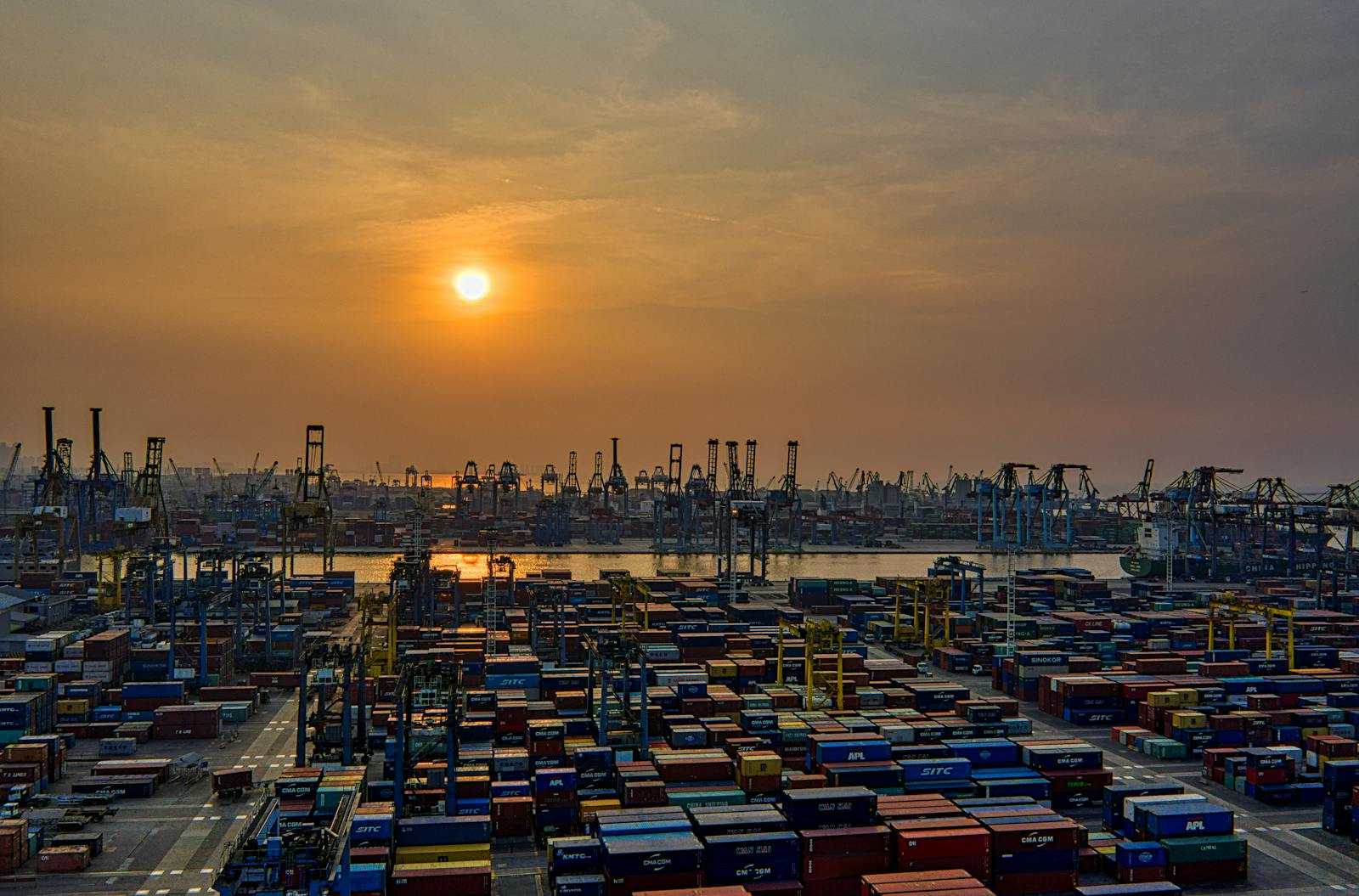
Guangzhou sits on the Pearl River, close to several major export ports including Nansha and the wider Pearl River Delta network. That access keeps freight costs competitive and sailing schedules frequent. Depending on your destination, goods ship by sea in containers, by air for urgent orders, or by rail for land routes to Europe and Central Asia.
An agent calculates the most economical mode for your order size and timeline. Small orders are often consolidated — combined with other buyers’ goods into one container, so you pay only for your share of space. For larger volumes, a full container load (FCL) makes more sense. The agent also compares quotes from multiple forwarders to keep landed cost honest.
The freight mode you pick balances speed against cost. This quick guide helps you match a mode to your order:
| Shipping Mode | Best For | Trade-Off |
|---|---|---|
| Sea freight (FCL) | Large, steady volumes | Low cost, slower transit |
| Sea freight (LCL consolidation) | Small or mixed orders | Shared cost, needs consolidation planning |
| Air freight | Urgent or high-value items | Fast but expensive per unit |
| Rail freight | Routes to Europe and Central Asia | Middle speed and cost |
Export Documentation Checklist Table
Every export from Guangzhou requires a specific set of documents. The table below lists the core paperwork a sourcing agent prepares, why it matters, and who typically needs it.
| Document | Purpose | Who Requires It |
|---|---|---|
| Commercial Invoice | States goods, value, and terms for customs and payment | Customs, bank, importer |
| Packing List | Details cartons, weights, and dimensions for freight | Carrier, customs |
| Bill of Lading (B/L) | Evidence of shipment and proof of ownership | Carrier, importer, buyer |
| Certificate of Origin | Confirms where goods were made (duties may differ) | Importer’s customs |
| Inspection Certificate | Confirms pre-shipment quality checks | Buyer, some customs regimes |
| Export License / Permits | Covers restricted products, exports, or regulated goods | Chinese export authorities |
Why Accurate Documents Save Money
A single mismatch — a wrong weight, a misspelled address, an incorrect value — can delay a container and trigger demurrage fees. Agents standardize documents and double-check them so clearance goes smoothly.
Choosing Incoterms and Consolidation
Incoterms define who pays for freight, insurance, and duties, and where risk transfers from seller to buyer. Common terms in Guangzhou sourcing include EXW (Ex Works), FOB (Free On Board) at the Chinese port, and CIF (Cost, Insurance, Freight) to the destination. For most importers, FOB from a Guangzhou or Nansha port is a sensible default: it fixes your price at the port and leaves you in control of the onward legs.
Decision rules of thumb: choose FOB when you want control and transparent ocean freight; choose CIF when you prefer one all-in price; use DDP (Delivered Duty Paid) when you want the agent to handle everything to your door. Consolidation suits orders that do not fill a container, while a large single product usually benefits from a direct full-container booking.
Examples of Smooth Export Flows
Example 1 — Retailer using consolidation. A boutique retailer ordered twelve product lines from different Guangzhou vendors. Instead of shipping each separately, their agent consolidated everything into a single shared container from the Nansha port. Freight per unit fell by nearly forty percent and the whole collection cleared under one customs entry.
Example 2 — Tech importer managing currency. An electronics importer found their factory gave a better rate when paid in CNY instead of USD. The agent structured the payment accordingly, lowered the exchange-rate loss, and held the balance until a pre-shipment inspection passed.
Example 3 — First shipment with full documents. A first-time importer avoided a costly customs hold when their agent prepared a correct commercial invoice, packing list, and certificate of origin in advance, so the container cleared in two days.
Common Documentation and Payment Mistakes
- Paying the full balance before the goods are inspected, then discovering defects with no leverage to recover the money.
- Accepting the factory’s dollar rate without asking for a CNY quote, and paying an avoidable exchange markup.
- Omitting a certificate of origin when your destination grants tariff preferences, and paying higher duties.
- Leaving inspection certificates unfinished and watching a customs authority reject the cargo.
- Booking separate shipments for small orders instead of consolidating, and doubling your freight cost.
- Choosing an Incoterm without understanding who owns the cargo and insurance at each point of the journey.
- Letting the supplier prepare all documents unchecked, risking small errors that cause big delays.
Recommendations for Clean Exports
- Negotiate in CNY when possible and always ask for an itemized quote in both currencies.
- Never release full payment until pre-shipment inspection passes and results are confirmed.
- Prepare the full document set before the cargo sails, not after it is stranded at the port.
- Consolidate small or mixed orders to cut per-unit freight costs.
- Choose FOB or a fully managed term that matches your comfort with insurance and risk.
- Partner with a sourcing agent who verifies suppliers and standardizes export compliance, such as Woosourcing’s product sourcing service.
Frequently Asked Questions
Should I pay my Guangzhou supplier in CNY or USD?
Paying in CNY often avoids the bank’s dollar markup and can lower your effective cost. Ask for quotes in both currencies so you can compare the real difference.
What payment terms are standard in Guangzhou?
The most common is a 30 percent deposit with the balance before shipment. More risk-averse buyers use letters of credit or pay against shipping documents after inspection.
Which port is used for Guangzhou exports?
Goods commonly ship from the Nansha port or the wider Pearl River Delta network, all close to Guangzhou, offering frequent sailings and competitive freight rates.
What export documents do I need?
Core documents are the commercial invoice, packing list, bill of lading, certificate of origin, and a pre-shipment inspection certificate. Regulated goods may need an export license.
What is consolidation and when should I use it?
Consolidation combines your goods with others into one shared container, so you pay only for your share of space. Use it when your order is too small to fill a container alone.
Which Incoterm should I choose?
FOB from a Guangzhou port is a solid default for control and transparent freight. Choose CIF for an all-in price or DDP when you want the agent to handle delivery to your door.
How do I avoid customs delays?
Prepare accurate, complete documents in advance, verify inspections are done before shipment, and work with an agent who standardizes export compliance on every order.
Conclusion
Currency, logistics, and export documentation form the operating backbone of every successful sourcing project from Guangzhou. Handling them well — negotiating the right currency, structuring smart payment terms, booking freight from the best port, and preparing flawless documents — separates a smooth, profitable import from a costly delay.
A seasoned Guangzhou sourcing agent makes these complex tasks routine. By managing the money, the freight, and the paperwork, they let you focus on selling your products while your supply chain runs cleanly from factory floor to your door.
Let Woosourcing Handle the Details
Woosourcing is a China-based sourcing company that manages currency, logistics, and export documentation for buyers sourcing from Guangzhou and across southern China. We negotiate rates, consolidate shipments from the Pearl River Delta ports, and prepare compliant paperwork so your goods clear customs without friction.
- Currency negotiation and payment term structuring
- Freight booking and LCL consolidation from Guangzhou ports
- Preparation of commercial invoices, packing lists, and certificates of origin
- Pre-shipment inspection certificates and quality control
- Incoterm guidance and end-to-end export management
Contact us today for a free consultation on your next shipping, or learn more about our product sourcing service.

Recent Comments