

China vs Mexico Manufacturing 2026: Cost, Tariffs, Lead Time and Fit
Direct answer: Mexico wins on freight, lead time and tariff treatment for qualifying USMCA goods; China wins on component ecosystems, tooling speed, factory choice and volume pricing. For most importers the deciding factor is not labour cost but whether your bill of materials can be sourced regionally — if more than half your components originate in Asia, moving final assembly to Mexico rarely delivers the expected saving.
Should we move production from China to Mexico? The honest answer depends on arithmetic most comparisons skip. This guide breaks down the real cost stack, tariff mechanics, category fit and an eight-step framework you can run yourself.

Table of Contents
- China vs Mexico at a Glance
- The Real Cost Stack: Where the Money Actually Goes
- Tariffs and USMCA: The Biggest Single Variable
- Lead Time, Freight and Working Capital
- Supplier Ecosystem and Component Depth
- Which Product Categories Fit Which Country
- An 8-Step Decision Framework
- Practical Examples
- Common Mistakes
- Expert Recommendations
- Frequently Asked Questions
- Conclusion
China vs Mexico at a Glance
| Factor | China | Mexico | Advantage |
|---|---|---|---|
| Ocean/land transit to US | 22–40 days port to port | 2–7 days by truck or rail | Mexico |
| Tariff treatment (US) | MFN duty plus Section 301 on many lines | Duty-free if USMCA rules of origin are met | Mexico |
| Component availability | Extremely deep, local sub-tier supply | Thin outside auto, appliance and electronics clusters | China |
| Tooling build speed | 3–6 weeks typical | 6–12 weeks, often tooled in Asia anyway | China |
| Supplier choice per category | Hundreds of qualified factories | Often fewer than ten | China |
| Minimum order quantities | Low and negotiable | Usually higher, contract-driven | China |
| Labour cost per hour | Moderate, rising | Comparable to coastal China | Neutral |
| Time-zone overlap with US | None to poor | Full working-day overlap | Mexico |
| Inventory required to cover lead time | High | Low | Mexico |
The Real Cost Stack: Where the Money Actually Goes
Buyers habitually compare hourly wages, but direct labour is a minority share of the ex-works price. The table below shows how each cost element behaves when you switch origin.
| Cost element | Share of ex-works price | Behaviour when moving to Mexico |
|---|---|---|
| Raw materials and components | 45–70% | Often unchanged or higher if imported from Asia |
| Direct labour | 8–25% | Roughly flat versus coastal China |
| Factory overhead and energy | 10–18% | Higher energy, comparable rent |
| Tooling amortisation | 2–8% | Higher unless tooling is transferred |
| Supplier margin | 5–15% | Higher where competition is thin |
| Freight to US warehouse | 4–15% of landed | Substantially lower |
| Duty and tariff | 0–25%+ of value | Potentially zero under USMCA |
The pattern is clear: Mexico usually loses on ex-works price and wins on delivered price, and that win depends on the top row — materials. A Mexican assembler importing Chinese components pays Chinese prices plus import handling, then loses USMCA eligibility if regional value content falls short.
Tariffs and USMCA: The Biggest Single Variable
Duty treatment moves landed cost more than any negotiation you will run. Goods made in Mexico enter the United States duty-free only if they satisfy USMCA rules of origin — typically a tariff-shift or a regional value content threshold. Assembling imported parts is often not enough.
Chinese-origin goods pay the normal MFN duty for their classification, and many lines additionally carry Section 301 tariffs. Because tariff actions change, verify the current rate for your exact classification rather than relying on a supplier’s estimate. The ITA’s Mexico Country Commercial Guide documents market-entry and origin requirements in detail.
Expert tip: Before comparing quotations, confirm your HTS classification and calculate duty for both origins. A 12-point tariff difference can outweigh every other saving — or vanish if your Mexican supplier cannot certify origin.
Lead Time, Freight and Working Capital
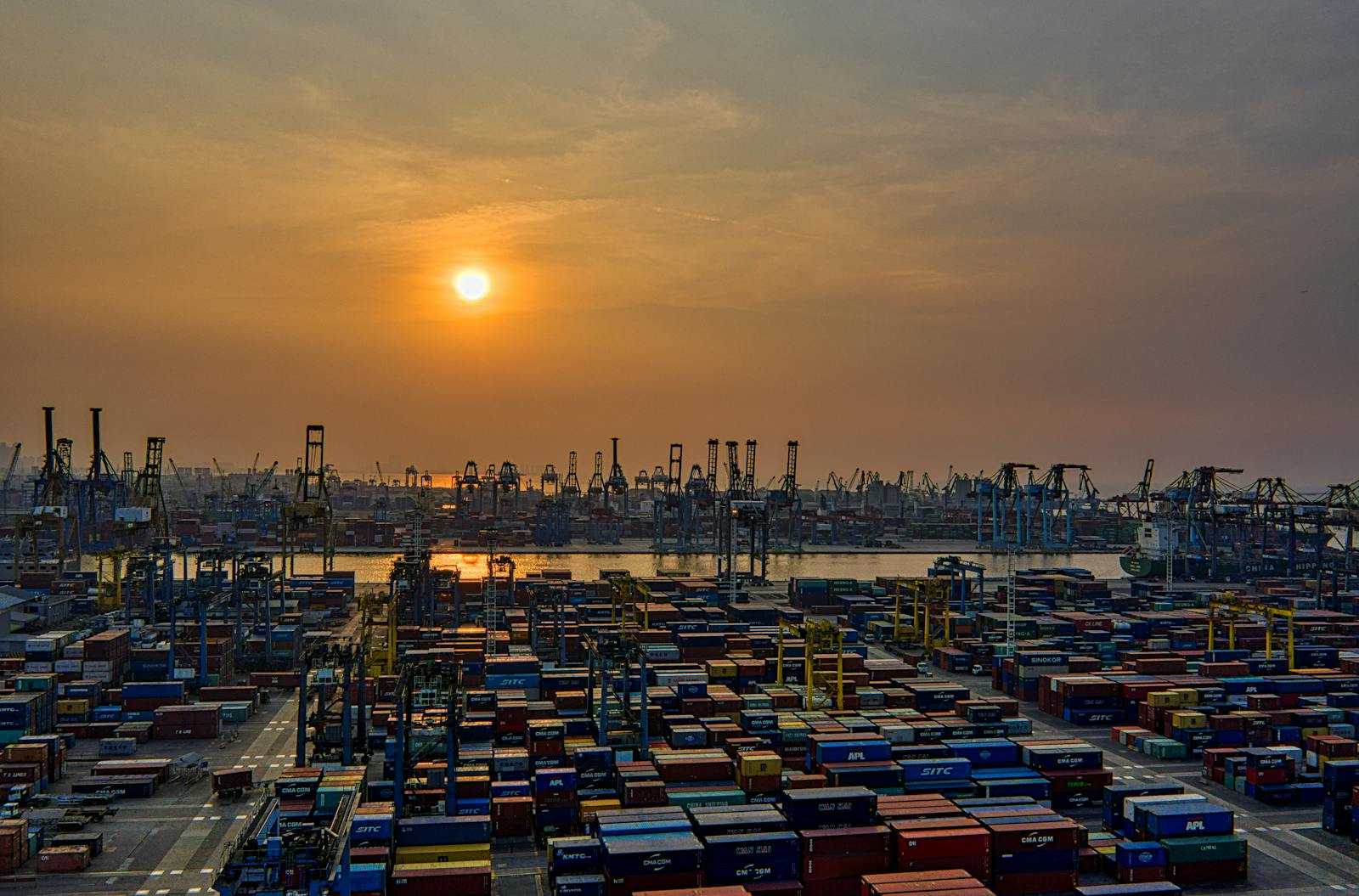
Mexico’s structural advantage is time. Cross-border trucking delivers in days rather than weeks, compressing the cash-to-cash cycle and shrinking the safety stock you must finance.
- Reorder responsiveness: Mexican replenishment often runs three to five weeks door to door; the China cycle is nine to fourteen.
- Inventory carrying cost: fewer weeks of pipeline stock means less capital locked in containers.
- Forecast error exposure: shorter lead times let you order closer to demand, reducing markdowns and stockouts.
Quantify this rather than describe it. If shortening lead time by eight weeks removes two months of safety stock, credit the carrying-cost saving to the Mexican quotation. Many nearshoring cases only pass once this credit is included — and many fail even with it.
Supplier Ecosystem and Component Depth
China’s advantage is not one factory; it is the cluster around it. Injection moulders, PCB houses, plating shops and packaging printers sit within a short drive, so engineering changes are absorbed quickly. Mexico has world-class clusters in automotive, appliances and medical devices, but sub-tier depth thins fast outside those sectors. The consequences surface during development, not quoting:
- Prototype iterations take longer when the moulder is far from the assembler.
- Engineering changes cost more when a component has a single regional source.
- Fewer qualified factories means weaker price competition and less MOQ flexibility.
- Specialist finishes — anodising, complex printing, textile treatments — may not exist locally at all.
If your product is still evolving, China’s ecosystem usually shortens time to market; if your design is frozen and volumes steady, Mexico’s proximity becomes the stronger asset. This logic drives the China Plus One diversification strategy most mature importers now run.
Which Product Categories Fit Which Country
| Category | Better fit | Reason |
|---|---|---|
| Bulky, low-value goods (furniture, plastics) | Mexico | Freight dominates landed cost |
| Automotive parts and harnesses | Mexico | Mature cluster plus USMCA origin rules |
| Major appliances and HVAC | Mexico | Established assembly base near market |
| Consumer electronics and accessories | China | Component depth and rapid iteration |
| Small kitchenware and houseware | China | Low MOQ, huge factory choice |
| Apparel and soft goods | Depends | Mexico for fast replenishment, Asia for cost |
| Toys and seasonal novelty | China | Tooling speed and specialist finishing |
| Medical disposables | Either | Both have qualified, certified plants |
| Highly customised or fast-changing SKUs | China | Engineering flexibility and supplier density |
An 8-Step Decision Framework
- Classify the product. Confirm the HTS code and current duty for both origins first.
- Map the bill of materials by origin. Calculate what percentage of component value could realistically be sourced regionally.
- Test USMCA eligibility. Ask a customs broker whether your process meets the tariff-shift or value-content rule.
- Quote both origins on identical specifications. Same materials, tolerances, packaging and Incoterm.
- Build a full landed-cost model. Include freight, duty, brokerage, insurance, inland delivery and defect allowance.
- Add the working-capital credit. Value the inventory and lead-time reduction explicitly.
- Audit the shortlisted factory. Verify capacity, equipment and systems on site in either country.
- Pilot before you migrate. Run one production order and measure defect rate, on-time delivery and true total cost.
Practical Examples
Example 1 — Steel shelving, 6,000 units/year. Ex-works China was 18% cheaper, but the product is bulky and freight consumed the gap. With duty-free USMCA treatment and truck delivery, Mexico landed 11% lower and cut replenishment from eleven weeks to three.
Example 2 — Bluetooth speaker, 40,000 units/year. The Mexican assembler quoted competitively but sourced the module, driver and battery from Asia. Regional value content fell short, duty applied anyway, and landed cost rose 9%. The buyer stayed in China.
Example 3 — Branded pet bed, 25,000 units/year. Cost favoured Asia, but the retailer needed rapid promotional replenishment, so the answer was a split: bulk seasonal volume from China, fast-turn units from a Mexican plant. Blended landed cost rose 3%; markdowns fell sharply.

Common Mistakes
- Comparing hourly wages instead of landed cost. Labour is often under a fifth of the ex-works price.
- Assuming “Made in Mexico” means duty-free. Origin must be earned, certified and documented.
- Ignoring component origin. Imported parts erase both the tariff and freight benefit.
- Skipping the factory audit because Mexico feels closer. Proximity is not verification.
- Moving tooling before validating the process. Transfers without a qualification run cause months of downtime.
Expert Recommendations
- Run the comparison on your three highest-volume SKUs first — that is where a percentage point is worth real money.
- Ask Mexican suppliers to state, in writing, which components are regionally sourced and who certifies origin.
- Keep tooling ownership in your name in both countries, with the mould identified by serial number.
- Dual-source strategically: keep engineering-intensive SKUs in China and move bulky, stable SKUs closer to market, applying the same factory audit standard to both origins.
Frequently Asked Questions
Is manufacturing in Mexico cheaper than China in 2026?
Not at the factory gate for most consumer goods — Mexican ex-works prices are usually equal to or higher than coastal China. Mexico wins on a landed basis when freight is large, USMCA duty-free treatment applies, or shorter lead times cut inventory financing.
What are Mexico’s labour costs compared with China?
Wages in Mexico and coastal China are now broadly comparable; inland China and secondary Mexican states are cheaper. Direct labour is only 8–25% of ex-works cost, so a one-dollar gap rarely decides alone.
Do goods made in Mexico automatically enter the US duty-free?
No. Duty-free entry requires USMCA rules of origin — a tariff shift, a value-content threshold, or both — plus certification. Products assembled from mostly imported parts often fail and stay dutiable.
How long does it take to move production from China to Mexico?
Plan six to twelve months: qualification, tooling transfer, first-article approval, pilot and ramp-up. Rushing qualification is the most common cause of failed migrations.
Should I choose Mexico or Vietnam as my China alternative?
By driver: Vietnam wins on ex-works cost for labour-intensive goods but shares China’s long ocean transit; Mexico wins on speed and tariff treatment for the US.
Can I keep my Chinese supplier and add Mexican production?
Yes — dual sourcing keeps China’s cost and flexibility for engineering-intensive SKUs while placing bulky or time-sensitive volume near the market, hedging tariff and disruption risk.
How do I verify a Mexican factory as thoroughly as a Chinese one?
Same process: confirm legal and tax status, verify site ownership, inspect equipment and capacity, review certification records, check references, and audit on site before volume orders.
Conclusion
China versus Mexico is not a contest between a cheap and an expensive country — it is a trade-off between manufacturing depth and market proximity. China offers unmatched component ecosystems, tooling speed and supplier choice; Mexico offers days instead of weeks, duty-free access for goods that genuinely qualify, and a working-capital profile many importers undervalue.
Decide product by product: classify the goods, map component origin, test USMCA eligibility, model landed cost honestly and pilot before you migrate. See also China versus India and China versus Vietnam.
Need Help Sourcing Products from China?
Request a free sourcing consultation with Woosourcing. Our team can help you with:
- Product sourcing
- Supplier verification
- Factory audits
- Quality inspections
- Private label manufacturing
- International shipping
Contact us today for a free quotation, or submit your product sourcing request and we will benchmark your product across origins.




Recent Comments