
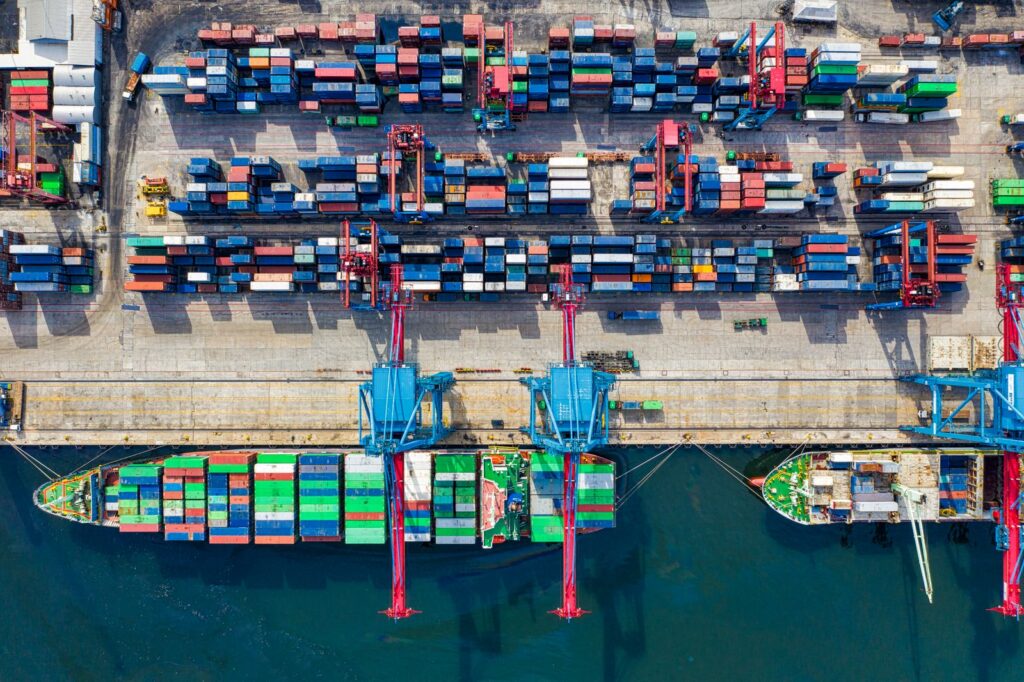
Mixed container loading from Yiwu means combining products from many different market vendors into one sea container that ships under a single bill of lading. It is the standard way importers buy from Yiwu, because no single booth can fill a 40ft container on its own. A consolidation warehouse receives goods from dozens of suppliers, checks and repacks them, then loads everything into one container in a planned sequence.
This guide explains how Yiwu consolidation works in 2026, what it costs, how to plan container capacity, and the documentation rules that catch first-time buyers out.
Table of Contents
- What Is Mixed Container Loading from Yiwu?
- LCL vs Mixed FCL vs Buyer’s Consolidation
- How Yiwu Consolidation Works: 8 Steps
- Container Capacity Planning
- What Yiwu Consolidation Costs
- Documentation and Customs Rules
- Practical Examples
- Common Mistakes
- Expert Recommendations
- FAQ
- Conclusion
- Need Help Sourcing from China?
What Is Mixed Container Loading from Yiwu?
Yiwu International Trade City hosts roughly 75,000 booths selling small commodities: stationery, toys, hardware, kitchenware, party goods, jewellery and textiles. Order values per booth are small — often USD 500 to USD 3,000 — and minimum order quantities are measured in cartons, not containers.
Mixed container loading, also called cargo consolidation, solves the mismatch. A consolidation warehouse acts as your collection point:
- Every vendor delivers your cartons to the same warehouse address
- The warehouse books in each delivery against your order list
- Goods are counted, inspected, sometimes repacked or relabelled
- When your order list is complete, everything is loaded into one container
- One shipment, one bill of lading, one customs entry
The commercial logic is simple: sea freight is priced per container, not per supplier. Twenty suppliers in one container cost the same to ship as one supplier in one container. Consolidation is what makes small-order, high-variety buying economically viable. If you are new to the market itself, start with our Yiwu market sourcing guide.
LCL vs Mixed FCL vs Buyer’s Consolidation
Buyers routinely confuse three different arrangements. They are not interchangeable.
| Method | How it works | Best volume | Typical transit | Main risk |
|---|---|---|---|---|
| LCL (Less than Container Load) | Your cargo shares a container with unrelated shippers, arranged by the carrier’s CFS | 2-15 CBM | Slowest — extra CFS handling both ends | Destination CFS fees; damage from mixed stacking |
| Mixed FCL (buyer’s consolidation) | Only your cargo, from many vendors, in a container you fill | 18+ CBM | Fastest — direct port to port | Under-filling the box; you pay for empty space |
| Groupage by agent | Agent combines several small buyers who all use that agent | 5-20 CBM | Medium — waits for the box to fill | Departure delays while the agent finds cargo |
Rule of thumb: below roughly 15 CBM, LCL usually wins. Above 20-25 CBM a mixed 40ft FCL is almost always cheaper per cubic metre and safer. In between, compare on landed cost, not freight rate — destination charges are where LCL quietly becomes expensive.

How Yiwu Consolidation Works: 8 Steps
- Build a master order list. One row per SKU with booth number, contact, unit price, quantity, carton dimensions, carton weight and cartons per SKU. This spreadsheet drives everything downstream.
- Open a warehouse account. Your agent or forwarder issues a warehouse code and delivery address. Every vendor must mark cartons with that code plus your SKU reference.
- Pay vendor deposits. Booths typically take 30-50% down, balance on delivery. Pay through the agent so payment and receipt are reconciled by one party.
- Vendors deliver. Delivery windows run 3-20 days depending on whether goods are stock or made to order.
- Warehouse receiving and check. Cartons are counted, weighed, measured and photographed. Discrepancies are raised with the booth immediately, while the unpaid balance still gives you leverage.
- Repack and label. Weak market cartons are reinforced, retail packaging is added, barcodes and country-of-origin marks are applied.
- Load plan and stuffing. Heavy, dense cartons go at the bottom and evenly across the floor; light bulky goods on top. Loading photos should be taken throughout.
- Export declaration and sailing. The agent files the customs declaration, issues the packing list and commercial invoice, and releases the bill of lading after balance payment.
Container Capacity Planning
Container volume is quoted in CBM (cubic metres). Nominal capacity is never achievable — irregular carton sizes create voids. Plan against realistic loadable volume.
| Container | Nominal CBM | Realistic mixed-cargo CBM | Max payload | Typical Yiwu use |
|---|---|---|---|---|
| 20ft standard | 33 CBM | 26-28 CBM | ~21,700 kg | Dense goods: hardware, ceramics, tools |
| 40ft standard | 67 CBM | 54-58 CBM | ~26,700 kg | Mixed general merchandise |
| 40ft high cube | 76 CBM | 62-68 CBM | ~26,500 kg | Light bulky goods: toys, party, plastics |
Yiwu goods are usually volume-limited rather than weight-limited — a 40ft HC of toys may weigh only 8 tonnes. Aim for 90-95% of realistic capacity: buying 3 extra CBM of fast-moving stock beats shipping air.
What Yiwu Consolidation Costs
Consolidation charges are separate from ocean freight and are usually billed per CBM or per operation.
| Charge | Typical 2026 range | Notes |
|---|---|---|
| Warehouse receiving and storage | USD 3-8 per CBM (first 15-30 days free) | Storage clock starts on first delivery, not last |
| Inspection on receipt | USD 5-15 per supplier order | Count, photo, dimension check |
| Repacking / reinforcing | USD 0.30-1.20 per carton | Higher for retail-ready repacking |
| Labelling / barcoding | USD 0.05-0.20 per unit | Volume dependent |
| Container stuffing | USD 100-220 per 40ft | Labour to load the box |
| Export declaration and docs | USD 60-150 per shipment | One fee regardless of vendor count |
| Agent commission | 3-8% of goods value | Covers buying, QC coordination, follow-up |
For a typical 40ft HC of small commodities, total consolidation-side cost lands around USD 900-1,800 before ocean freight. Spread across 60 CBM that is roughly USD 15-30 per CBM — modest against the savings from consolidating rather than shipping twenty LCL lots. For how these fees roll into your final unit economics, see our breakdown of hidden import costs.
Documentation and Customs Rules
A mixed container is one customs entry containing many product types, and that is precisely where declarations go wrong.
- Line-item accuracy. Each SKU needs its own description, HS code, quantity, unit value and origin. Lumping thirty products under “general merchandise” invites inspection and penalties.
- HS classification. Yiwu containers routinely span 15-40 tariff lines. Classify at SKU level before shipping.
- Consistent paperwork. Invoice, packing list and bill of lading must agree exactly on carton counts, weights and values.
- Restricted goods. Batteries, aerosols, magnets, liquids and cosmetics have separate handling and documentation rules. Declare them at booking, not at the port.
- Marking rules. Products and retail packaging generally need permanent, legible country-of-origin marking at the point of sale to the end buyer.
US importers should review the entry summary requirements published by U.S. Customs and Border Protection before their first mixed container arrives, since the entry data is filed from your packing list.

Practical Examples
Example 1: European party-goods retailer
Bought 41 SKUs from 17 booths, total 58 CBM, goods value USD 46,000. The 40ft HC filled to 94%. Consolidation charges were USD 1,340 (about USD 23 per CBM) versus an LCL equivalent of roughly USD 82 per CBM after destination charges — a saving of about USD 3,400 on one shipment.
Example 2: Australian homewares buyer who under-planned
Ordered 34 CBM expecting to fill a 40ft. The box left at 63% capacity because two vendors defaulted late. Effective freight cost per CBM rose 58%. The fix on the second order was a 10% volume buffer of fast-moving stock held at the warehouse as fill cargo.
Example 3: US gift importer with a labelling problem
Twelve of 28 SKUs arrived without country-of-origin marks. Because goods were checked on receipt rather than at the port, relabelling cost USD 380 in Yiwu instead of a rejected entry at destination.
Common Mistakes
- No carton dimensions on the order list. Without CBM per SKU, capacity planning is guesswork and the container leaves half empty or overbooked.
- Paying vendors in full before warehouse receipt. Once the balance is paid, short shipments and quality disputes become almost impossible to resolve.
- Ignoring the storage clock. Free storage counts from the first delivery. A vendor who delivers eight weeks early can trigger storage charges on the whole order.
- Skipping receipt inspection. Market goods vary batch to batch. Checking at the warehouse is the last practical control point.
- Declaring a generic description. A single vague line item on a 30-SKU container is the fastest route to a customs hold.
- Mixing restricted items silently. One undeclared box of lithium batteries can hold an entire container.
- Choosing an agent on commission rate alone. A 3% agent who skips receipt inspection costs more than a 6% agent who does it.
Expert Recommendations
- Build the CBM model before you buy. Collect carton size and weight from every booth at quotation stage and total it in the order list.
- Set a hard warehouse cut-off date. Tell every vendor the same date and treat it as firm. Late deliveries either ship next container or are cancelled.
- Hold 8-12% of volume as flexible fill cargo. Cheap, dense, fast-moving stock you can add at the last minute to top up the box.
- Require photo evidence at three points: goods received, repacked, and container loading with the door seal visible.
- Classify HS codes at SKU level and keep the classification list as a reusable master file for future shipments.
- Pay balances only after receipt confirmation from the warehouse, not on the vendor’s word.
- Track a per-CBM landed cost for every shipment. It is the single number that tells you whether consolidation is working.
Key takeaway: Yiwu consolidation is a data problem before it is a logistics problem. Buyers who track carton dimensions, delivery dates and HS codes at SKU level fill their containers to 90%+ and clear customs cleanly. Buyers who do not, ship air and pay for it twice.
Frequently Asked Questions
How many suppliers can go into one Yiwu container?
There is no technical limit. Containers with 20-40 vendors are routine, and experienced warehouses handle 60+. The practical constraint is coordination: every added vendor is another delivery to track and another line on the customs declaration.
What is the minimum volume worth consolidating in Yiwu?
Around 12-15 CBM. Below that, LCL from a single collection point is usually cheaper. Above 20 CBM, a mixed FCL almost always wins on cost per cubic metre and on cargo safety.
How long does Yiwu consolidation take?
Plan 15-35 days from first order to container departure. Stock goods arrive at the warehouse within a week; made-to-order items take 20-30 days. The slowest vendor sets the sailing date.
Who inspects the goods in a mixed container?
The consolidation warehouse performs receiving checks — counts, dimensions and visual condition. For anything requiring functional or AQL sampling, book a separate inspection. Our comparison of during-production and pre-shipment inspection explains which applies.
Can I add products after loading has started?
No. Once stuffing begins the load plan is fixed and the declaration is being prepared. Late additions must wait for the next container or ship separately by air.
Do I need a separate HS code for every product?
Yes, at line-item level on the declaration. Products of the same type and material can share a code, but distinct product categories cannot be merged into one line.
Is a 20ft or 40ft container better for Yiwu goods?
A 40ft high cube usually gives the lowest cost per CBM for typical light, bulky small commodities. A 20ft makes sense only for dense goods such as hardware, tools or ceramics that hit weight limits before volume limits.
Conclusion
Mixed container loading is what makes Yiwu work as a sourcing destination. It turns twenty small vendor orders into one shipment, one document set and one freight cost. The buyers who get the most out of it treat consolidation as a planning discipline: complete SKU data, a firm warehouse cut-off, receipt inspection while payment leverage still exists, and SKU-level customs classification.
Do those four things and a 40ft container from Yiwu is one of the most cost-efficient shipments in global trade. Skip them and you pay for empty space, storage, relabelling and customs delays on the same container.
Need Help Sourcing Products from China?
Request a free sourcing consultation with Woosourcing. Our team can help you with:
- Product sourcing
- Supplier verification
- Factory audits
- Quality inspections
- Private label manufacturing
- International shipping
Contact us today for a free quotation, or read more about how to hire a Yiwu market sourcing agent.




Recent Comments