
Choosing between sea freight and air freight is one of the most consequential decisions an importer makes. Get it right and you protect both your margins and your delivery timelines; get it wrong and you either overpay by thousands or run out of stock at the worst possible moment. This 2026 guide compares sea freight vs air freight from China across cost, speed, reliability, and product suitability, then gives you a clear decision framework and a break-even rule of thumb you can use on every shipment.
Quick answer: Choose sea freight for large, heavy, or non-urgent shipments where cost per kilogram matters most. Choose air freight for small, high-value, or time-sensitive goods where speed and reliability justify the premium. The crossover point is usually around 100-150 kg, below which air often wins on total cost too.
Table of Contents
- Sea Freight and Air Freight: The Basics
- Sea vs Air: Side-by-Side Comparison
- How Costs Are Actually Calculated
- The Break-Even Rule of Thumb
- Decision Framework
- Practical Examples
- Common Mistakes
- Expert Recommendations
- FAQ
- Conclusion
Sea Freight and Air Freight: The Basics
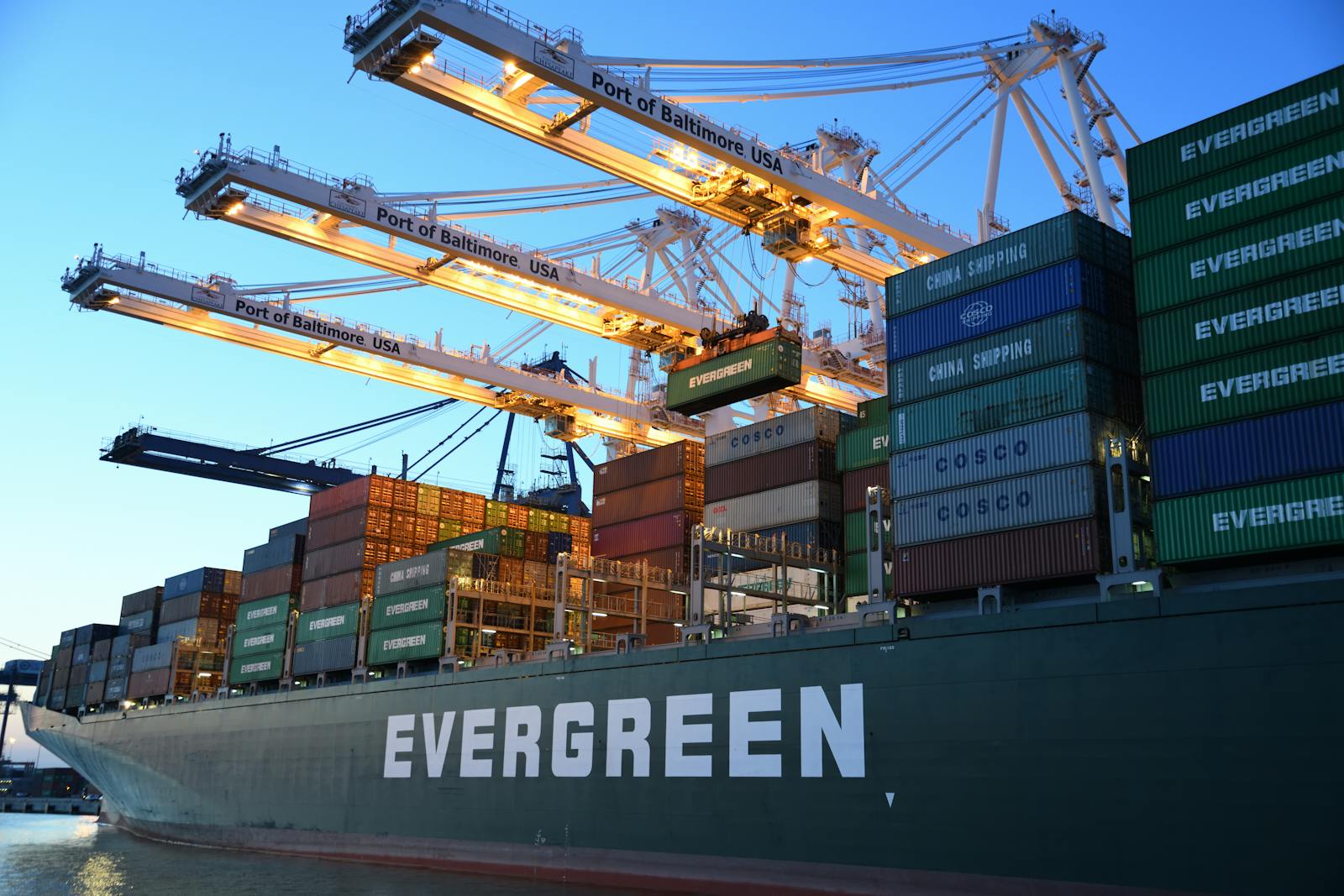
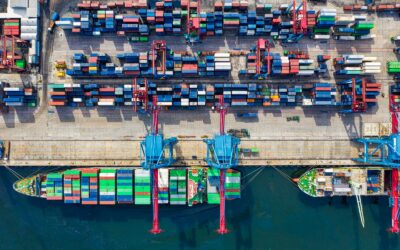
Sea freight moves goods by container ship. You can ship a Full Container Load (FCL), where you rent an entire 20ft or 40ft container, or Less than Container Load (LCL), where your cargo shares a container with other shippers. Sea freight is the backbone of global trade because it is by far the cheapest way to move volume.
Air freight moves goods by cargo or passenger aircraft. It is priced on chargeable weight (the greater of actual or volumetric weight) and is dramatically faster, typically 3-8 days door-to-door versus 30-45 days for sea. Because aircraft capacity is limited and fuel is costly, air commands a large premium per kilogram.
Sea vs Air: Side-by-Side Comparison
| Factor | Sea Freight | Air Freight |
|---|---|---|
| Transit time (port to port) | 25-40 days | 2-5 days |
| Door-to-door time | 30-45 days | 3-8 days |
| Cost per kg (heavy loads) | Lowest | Highest |
| Best cargo size | Large / heavy volume | Small / light / urgent |
| Pricing basis | Volume (CBM) or FCL rate | Chargeable weight |
| Carbon footprint | Low per unit | High per unit |
| Reliability / schedule | Prone to port delays | Highly consistent |
| Cash-flow impact | Inventory tied up longer | Faster turnover |
| Insurance cost | Lower | Slightly higher |
How Costs Are Actually Calculated
The two modes price cargo in fundamentally different ways, which is why the “cheaper” option flips depending on your shipment.
Sea freight pricing
- LCL is charged per cubic meter (CBM), so it rewards dense, heavy cargo.
- FCL is a flat rate per container regardless of weight, so it rewards filling the container fully.
- Add destination charges, customs, and delivery, sea has more fixed fees at both ends.
Air freight pricing
Air uses chargeable weight, the greater of actual weight and volumetric weight. Volumetric weight is calculated as:
Volumetric weight (kg) = Length × Width × Height (cm) ÷ 6000
This means bulky-but-light cargo (like pillows) is expensive to fly, while dense-but-small cargo (like electronics) is comparatively efficient by air.
The Break-Even Rule of Thumb
Because sea has high fixed costs and air has high per-kg costs, there is a crossover weight where they cost roughly the same. Use these approximate guidelines:
| Shipment weight | Usually cheaper by | Notes |
|---|---|---|
| Under ~100 kg | Air / express courier | Sea’s fixed fees dominate small loads |
| ~100-300 kg | Depends on urgency & density | Run both quotes; compare total landed cost |
| ~300-500 kg | Sea (LCL) for cost, air for speed | Cost gap widens as weight rises |
| Over ~500 kg / 2+ CBM | Sea freight | FCL becomes very cost-efficient |
Key takeaway: Never assume sea is always cheaper. For light shipments under ~100 kg, air freight or express courier frequently beats LCL on total landed cost once destination and handling fees are included.
Decision Framework
Ask these questions in order:
- Is it urgent? If you will stock out within a month, air freight protects revenue that dwarfs the freight premium.
- What is the value-to-weight ratio? High-value, low-weight goods (electronics, jewelry) favor air; low-value, heavy goods (furniture, tools) favor sea.
- What is the total weight/volume? Apply the break-even table above.
- What is the shelf life or seasonality? Seasonal or perishable goods often justify air to hit the selling window.
- Can you plan ahead? If yes, sea freight’s lower cost almost always wins for volume.
Pros and Cons at a Glance
Sea freight — Pros: lowest cost for volume, high capacity, lower carbon footprint. Cons: slow, port delays, ties up cash in inventory.
Air freight — Pros: fast, reliable schedules, better for high-value goods, faster cash turnover. Cons: expensive per kg, weight/size limits, higher carbon footprint.
Practical Examples
Example 1 — Bulk furniture reorder: An importer needs 12 CBM of flat-pack furniture with a 6-week runway. Best choice: sea freight (FCL). The cargo is heavy, bulky, and not urgent, exactly where ocean shipping’s cost advantage is largest.
Example 2 — Electronics launch: A brand needs 80 kg of high-value earbuds to hit a launch date in 10 days. Best choice: air freight. The goods are light, valuable, and time-critical; the freight premium is trivial versus a missed launch.
Example 3 — Amazon FBA restock gap: A seller is about to run out of a best-seller and has 150 kg to move. Best choice: split shipment, air a portion to bridge the stockout while the bulk travels by sea, balancing cost and availability.
Common Mistakes
- Assuming sea is always cheaper. For small, light shipments, air or express often wins on total landed cost.
- Ignoring volumetric weight. Bulky-but-light cargo can cost far more to fly than its actual weight suggests.
- Forgetting destination charges. Sea freight’s port, customs, and delivery fees can surprise first-time importers.
- Not planning for port delays. Build buffer time into sea shipments; congestion and customs holds are common.
- Choosing DDP without checking the mode. Confirm whether your quote covers duties and last-mile delivery to avoid hidden costs.
Expert Recommendations
- Always request both quotes. For any shipment near the 100-300 kg range, compare sea and air on total landed cost, not just freight rate.
- Use split shipments strategically. Air a small buffer stock and send the bulk by sea to protect availability without overpaying.
- Optimize your packaging. Reducing carton dimensions lowers both CBM (sea) and volumetric weight (air).
- Understand your Incoterms. Know whether you are on FOB, DDP, or EXW terms so you can compare quotes apples-to-apples. See our guide on DDP vs FOB shipping from China.
- Classify goods correctly. Accurate HS codes and declared values keep customs smooth. The U.S. International Trade Administration offers useful importing guidance.
Frequently Asked Questions
Is air freight always more expensive than sea freight?
No. Air is more expensive per kilogram, but for small, light shipments (roughly under 100 kg) it often beats sea on total landed cost once sea’s fixed destination and handling fees are added.
How long does sea freight take from China?
Port-to-port transit is typically 25-40 days depending on the destination, and door-to-door is usually 30-45 days including customs clearance and inland delivery.
How is air freight weight calculated?
Air freight uses chargeable weight, the greater of actual weight and volumetric weight (length × width × height in cm ÷ 6000). Bulky, light cargo is priced on volume, not actual weight.
What is the difference between FCL and LCL?
FCL (Full Container Load) means you rent an entire container at a flat rate, best when you can fill it. LCL (Less than Container Load) means your goods share a container and you pay per cubic meter, best for smaller volumes.
Can I combine sea and air freight?
Yes. Many importers use split shipments, sending a small quantity by air to prevent stockouts while the bulk travels by sea, balancing speed and cost.
Which is more reliable, sea or air?
Air freight generally has more consistent schedules, while sea freight is more prone to port congestion and customs delays. Build buffer time into ocean shipments.
Does shipping mode affect customs duties?
No. Duties are based on your product’s HS classification and declared value, not the transport mode. However, the mode affects freight cost, which can factor into your total landed cost calculation.
Conclusion
There is no universally “best” shipping mode, only the best mode for a specific shipment. Sea freight wins on cost for large, heavy, non-urgent cargo, while air freight wins on speed and reliability for small, high-value, or time-sensitive goods. The professional approach is to run both quotes, compare total landed cost, apply the ~100-300 kg break-even zone, and use split shipments when you need to protect availability. Master this decision and you will consistently protect both your margins and your delivery timelines.
Need Help Sourcing Products from China?
Request a free sourcing consultation with Woosourcing. Our team arranges the most cost-effective sea or air freight for every order and manages the entire door-to-door process.
Our team can help you with:
- Product sourcing
- Supplier verification
- Factory audits
- Quality inspections
- Private label manufacturing
- International shipping
Explore our product sourcing service or contact us today for a free quotation.



Recent Comments