
LTL Freight & Last-Mile Delivery from China: The 2026 Importer’s Guide
Less-than-truckload (LTL) freight and last-mile delivery are the two links in the China-to-customer chain that small and mid-sized importers misunderstand most. If your shipment is too small for a full container but too urgent for slow consolidation, LTL is your bridge. Once goods clear customs, last-mile delivery decides the customer experience. This guide explains how both work, what they cost, and the mistakes that erode margin.
Table of Contents
- What Is LTL Freight from China?
- How LTL Shipping from China Works
- LTL vs FCL: When to Choose Each
- Last-Mile Delivery from China to Your Customer
- LTL Cost Breakdown
- Common LTL & Last-Mile Mistakes
- Expert Recommendations
- Frequently Asked Questions
- Conclusion
What Is LTL Freight from China?
LTL freight means your goods share container or truck space with other shippers’ cargo. Instead of paying for a 20-foot or 40-foot container you only partly fill, you pay for the actual volume or weight your pallets occupy. In China sourcing, “LTL” most often refers to less-than-container-load (LCL) ocean shipping, but the same principle applies to consolidated trucking and to multi-vendor container sharing at Yiwu or Shenzhen.
For importers moving 1–10 cubic meters per shipment, LTL is usually the cheapest viable option. It sits between express courier (DHL/FedEx, great under 300 kg) and full container load (FCL, economical above ~15 CBM). The trade-off is handling: your cargo is consolidated, deconsolidated, and re-handled several times, which adds time and a small damage risk.
How LTL Shipping from China Works
A typical LTL shipment from China follows five handoffs:
- Pickup at factory: Your supplier delivers cartons to a consolidator’s warehouse in the origin city (Shenzhen, Ningbo, Shanghai, Yiwu).
- Consolidation: The forwarder packs your goods with other shippers’ cargo into a shared container.
- Main leg: Container sails to your destination port (Los Angeles, Rotterdam, etc.).
- Deconsolidation: At the destination CFS (container freight station), your pallets are separated.
- Final delivery: A local carrier moves your goods to your warehouse or straight to the customer (last mile).

Each handoff is a point where documentation and labeling must be perfect. A missing carton mark or an unclear bill of lading description can stall deconsolidation for days.
LTL vs FCL: When to Choose Each
The simplest rule: if your shipment fills more than about 60% of a 20-foot container (roughly 10–12 CBM), FCL is usually cheaper per unit and safer. Below that, LTL wins on cost.
| Factor | LTL / LCL | FCL (Full Container) |
|---|---|---|
| Best shipment size | 1–12 CBM | 12+ CBM |
| Cost model | Per CBM or per kg | Flat container rate |
| Transit time | +3–7 days (consolidation) | Direct, fastest |
| Handling / damage risk | Higher (multiple touches) | Lower (sealed once) |
| Documentation | Shared BL, more complex | Single BL, simpler |
| Customs exam risk | Can be examined with co-loaders | Examined alone |

For most growing e-commerce brands, a hybrid works best: LTL for replenishment orders under 10 CBM, FCL for seasonal bulk. Our product sourcing service can coordinate both so you never overpay for empty container space.
Last-Mile Delivery from China to Your Customer
“Last mile” is the final leg from the port, bonded warehouse, or 3PL to the end customer’s door. Even if your ocean LTL is flawless, a weak last mile destroys the customer experience. You have three structural options:
| Option | Speed | Best for |
|---|---|---|
| Domestic parcel (UPS/USPS/DHL Parcel) | 1–5 days | B2C e-commerce, small boxes |
| Local LTL trucking (pallet) | 2–7 days | Replenishing your own warehouse |
| 3PL direct-to-customer | 1–3 days | Brands wanting 2-day delivery |
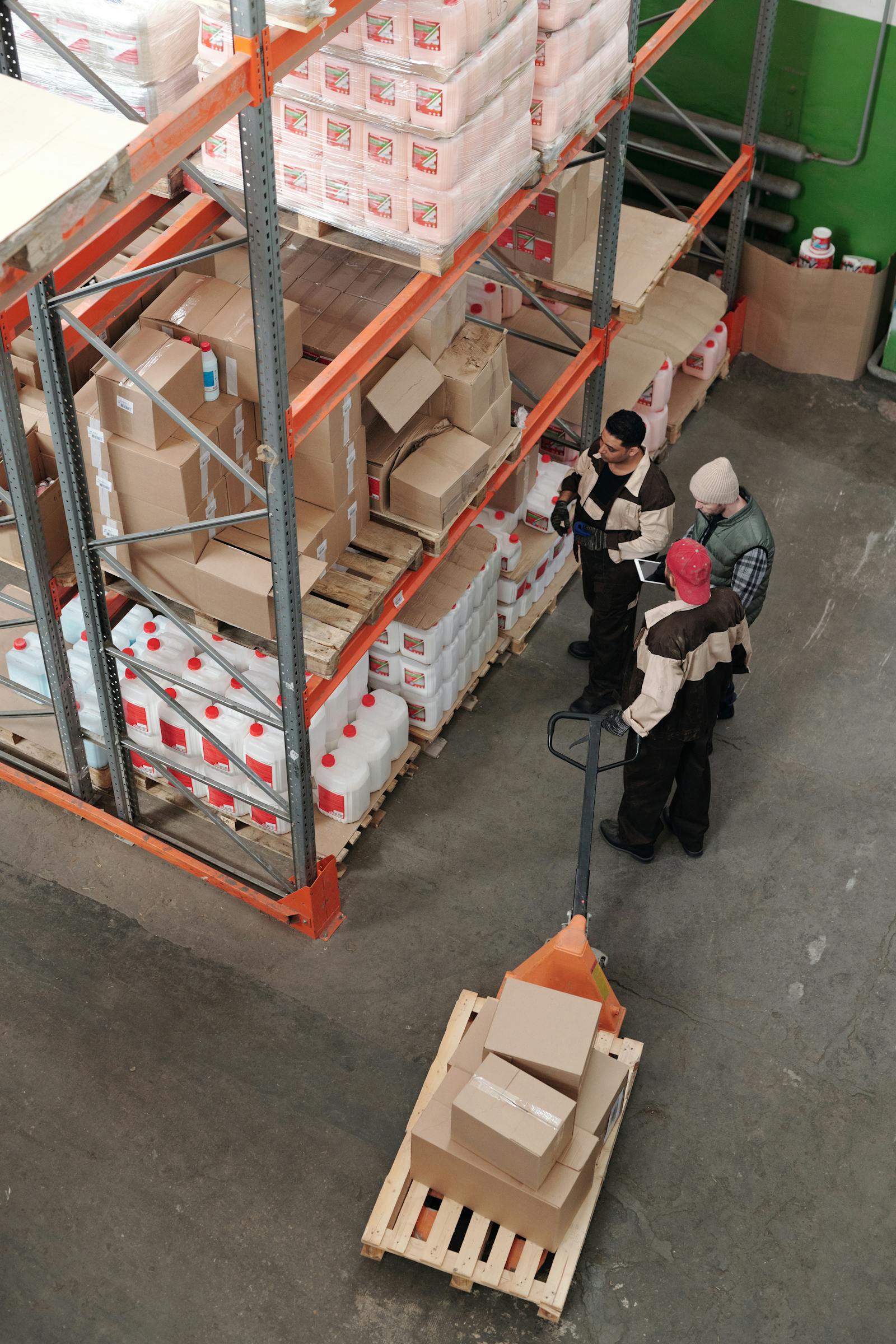
For Amazon sellers, last mile is handled by Amazon after inbound. For Shopify and DTC brands, routing through a domestic 3PL after clearance is the fastest way to offer prime-like speed without holding container-scale inventory.
LTL Cost Breakdown
LTL pricing is rarely a single number. Budget for these components:
| Cost component | Typical range (US-bound) |
|---|---|
| Origin consolidation & trucking | $30–$90 per CBM |
| Ocean freight (LCL) | $40–$110 per CBM |
| Destination CFS / deconsolidation | $25–$70 per CBM |
| Customs broker & duties | Broker $80–$200 + duty |
| Last-mile delivery | $0.6–$2.5 per kg (parcel) |
Total landed LTL cost commonly lands between $120 and $260 per CBM to a US warehouse, before duties. Always request an all-in quote that includes destination handling — that line is where many forwarders hide surprises. U.S. importers should also review CBP’s Basic Import and Export Guide for entry and duty requirements.
Common LTL & Last-Mile Mistakes
- Under-declaring volume: Forwarders re-measure; discrepancies trigger re-billing and delays.
- Weak carton labeling: Missing SSCC or carton numbers slow deconsolidation and cause mis-delivery.
- Ignoring DIM weight: Last-mile parcel carriers bill by dimensional weight, not just actual kg.
- Mixing Incoterms: If your supplier quotes EXW but you expect DDP, last-mile cost lands on you unexpectedly.
- No 3PL fallback: Relying on one parcel carrier creates single-point failure during peak season.
Expert Recommendations
Consolidate at the origin, de-risk at the destination. Use a China consolidator you trust, then hand off to a domestic 3PL with real-time tracking so your last mile is measurable, not hopeful.
- Set a 10–12 CBM threshold: below it use LTL, above it price an FCL.
- Require carton-level labels and a packing list that matches the bill of lading exactly.
- Compare DDP vs FOB shipping terms before quoting — they change who owns the last mile.
- Build a domestic 3PL relationship before your first container, not after a delay.
Frequently Asked Questions
What is LTL freight from China?
LTL (less-than-truckload, usually LCL by ocean) is shared container shipping where you pay only for the space your cargo occupies, ideal for 1–12 CBM shipments.
How much does LTL shipping from China cost?
Budget roughly $120–$260 per cubic meter to a US warehouse before duties, including origin consolidation, ocean freight, destination handling, and last-mile delivery.
Is LTL or FCL cheaper for small loads?
For under ~10–12 CBM, LTL is almost always cheaper. Above that, FCL wins on both price-per-unit and damage risk.
What is last-mile delivery in importing?
It is the final leg moving goods from the port, 3PL, or bonded warehouse to the end customer or your storage, typically via parcel or local trucking.
How long does LTL from China take?
Ocean LTL typically runs 30–45 days port-to-port plus 3–7 days for consolidation and deconsolidation, with last mile adding 1–5 days.
Do I need a freight forwarder for LTL?
Strongly recommended. A forwarder consolidates cargo, manages the BL, and coordinates destination handling — tasks that are difficult to manage directly at small volume.
Can LTL handle Amazon FBA deliveries?
Yes. Many forwarders offer FBA-bound LTL with carton labeling and appointment scheduling, though parcel or pallet rules still apply at Amazon inbound.
Conclusion
LTL freight and last-mile delivery are not afterthoughts — they are where small-importer margins are won or lost. Choose LTL below a 10–12 CBM threshold, demand all-in quotes, label cartons properly, and pair a trusted China consolidator with a domestic 3PL for a measurable last mile. The result is lower cost, fewer surprises, and a delivery experience your customers trust.
Need Help Sourcing Products from China?
Request a free sourcing consultation with Woosourcing. Our team can help you with:
- Product sourcing
- Supplier verification
- Factory audits
- Quality inspections
- Private label manufacturing
- International shipping
Contact us today for a free quotation.


Recent Comments